

HOW TO OBTAIN CITIZENSHIP OF GEORGIA
Legal Pathways, Naturalization, Dual Citizenship, and Citizenship by Exception
A Practical Guide for Investors, Entrepreneurs, Individuals of Georgian Ancestry, and Foreign Residents Seeking Georgian Citizenship
Updated 2026
Prepared by Archil Mchedlidze’s Law Practice LLC
5 Marjanishvili St., Tbilisi 0102, Georgia
Tel.: (+995 322) 999 007
Mob: (+995 599) 999 007
info@lawpractice.ge
www.lawpractice.ge
-
Introduction
-
Comparison of Citizenship Routes
-
Who Qualifies for Georgian Citizenship by Birth?
-
Naturalization: How to Obtain Georgian Citizenship After 10 Years of Residence
-
Citizenship Through Marriage to a Georgian Citizen
-
Citizenship by Exception: A Potential Route for Investors and High-Net-Worth Individuals
-
Citizenship by Exception for Investors
-
Citizenship for Persons of Georgian Origin
-
Restoring Lost Georgian Citizenship
-
Is Dual Citizenship Allowed in Georgia?
-
Why Citizenship Applications Are Refused
-
Can a Citizenship Refusal Be Appealed?
-
How Georgian Citizenship Can Be Lost
-
Step-by-Step Citizenship Application Process
-
Government Fees and Processing Times
-
Required Documents
-
Common Mistakes Applicants Make
-
Frequently Asked Questions (FAQ)
-
European Countries Georgian Citizens Can Visit Without Obtaining a Visa in Advance
-
Conclusion
-
Introduction
Citizenship of Georgia is regulated by the Organic Law of Georgia on Citizenship of Georgia. The law defines the legal grounds for acquiring Georgian citizenship, including citizenship by birth, naturalization, marriage, restoration, and citizenship by way of exception.
As of 2026, Georgia permits dual citizenship only in specific cases approved by the government. In most situations, applicants seeking Georgian citizenship must either renounce their previous nationality or obtain official consent to retain dual citizenship.
Citizenship matters are ultimately decided by the President following legal review, security screening, and evaluation by the competent government authorities.
This guide explains the principal legal pathways to Georgian citizenship under the current legislation, including the special discretionary procedures available to investors and individuals of exceptional interest to Georgia.
-
Comparison of Citizenship Routes
| Citizenship Route | Residence Requirement | Language / History Examination | Dual Citizenship Possibility |
|---|---|---|---|
| Citizenship by Birth | None | No | Yes |
| Naturalization | Generally 10 years | Yes | Limited |
| Marriage to Georgian Citizen | Generally 5 years | Yes | Limited |
| Restoration of Citizenship | Varies by case | Usually required | Possible |
| Citizenship by Exception | Discretionary | May be waived in certain cases | Commonly permitted |
Because each application is assessed individually, specific eligibility requirements may vary depending on the applicant’s circumstances and the legal provisions applicable at the time of application.
-
Who Qualifies for Georgian Citizenship by Birth?
A child automatically acquires Georgian citizenship if at least one parent is a Georgian citizen at the time of birth.
A child may also acquire Georgian citizenship in certain special situations, including:
- birth in Georgia to stateless parents;
- birth in Georgia where one parent is stateless and the other parent is unknown;
- certain surrogacy cases where the child would otherwise remain stateless.
Children whose parents are unknown and who reside in Georgia are generally presumed to be Georgian citizens unless proven otherwise.
-
Naturalization: How to Obtain Georgian Citizenship After 10 Years of Residence
Naturalization remains the most common pathway for foreign nationals who permanently relocate to Georgia.
Main Requirements
An adult applicant must generally:
- legally reside in Georgia for the last 10 consecutive years;
- demonstrate knowledge of the Georgian language;
- demonstrate knowledge of Georgian history and basic law;
- maintain employment, business activity, property ownership, or other economic ties in Georgia.
Continuous residence requirements are evaluated based on the applicant’s lawful presence and actual connection to Georgia. Extended absences may affect eligibility unless justified by accepted circumstances such as education, medical treatment, or other recognized exceptions.
Applicants are normally required to pass examinations covering:
- Georgian language;
- Georgian history;
- basics of Georgian law.
Applications may be submitted through the Public Service Development Agency or through Georgian consulates abroad.
-
Citizenship Through Marriage to a Georgian Citizen
A foreign national married to a Georgian citizen may apply for citizenship through a simplified naturalization procedure.
Requirements
The applicant must generally:
- be legally married to a Georgian citizen;
- continuously reside in Georgia for at least 5 years following the registration of the marriage;
- satisfy Georgian language and integration requirements.
Marriage alone does not automatically grant Georgian citizenship.
The authorities may evaluate whether the marriage is genuine and whether the applicant has established meaningful integration into Georgian society.
-
Citizenship by Exception: A Potential Route for Investors and High-Net-Worth Individuals
Georgia provides a discretionary citizenship mechanism known as citizenship by way of exception. This procedure is granted by presidential decision in cases involving special national interest.
Citizenship by exception may be granted to:
- persons of exceptional merit;
- investors important to the Georgian economy;
- athletes, scientists, artists, and public figures representing Georgia internationally;
- persons with strong ancestral or historical ties to Georgia.
In many cases, applicants under this category may retain another citizenship and become dual citizens.
When evaluating such applications, the state may consider:
- economic contribution;
- strategic state interests;
- cultural or scientific contribution;
- Georgian ancestry;
- long-term connection to Georgia.
Applicants with Georgian ancestry may still be required to demonstrate basic knowledge of the Georgian language, history, and legal system. However, these requirements generally do not apply to investors deemed important to the Georgian economy.
Georgia does not operate a formal citizenship-by-investment program. Nevertheless, citizenship by exception may provide a pathway for investors and high-net-worth individuals whose activities are considered beneficial to the country’s economic or strategic interests.
While there is no legally defined minimum investment threshold for citizenship by exception, substantial investments in Georgia may be considered when assessing whether an applicant is important to the Georgian economy. Each application is evaluated individually based on its specific circumstances and Georgia’s national interests.
-
Citizenship by Exception for Investors
Citizenship by way of exception remains one of the most flexible citizenship mechanisms available under Georgian law.
Unlike traditional naturalization, this procedure is not based primarily on a fixed residence requirement. Instead, authorities evaluate whether granting citizenship serves the interests of the Georgian state.
For investors, authorities may consider:
- investment activity in Georgia;
- creation of employment opportunities;
- contribution to economic development;
- strategic business projects;
- promotion of innovation and technology;
- support for sectors important to the national economy.
Relevant investments may include:
- real estate development projects;
- hospitality and tourism investments;
- manufacturing businesses;
- technology ventures;
- infrastructure-related projects;
- other activities generating measurable economic benefits.
Importantly, Georgian law does not establish a statutory minimum investment amount that automatically qualifies an applicant for citizenship.
Each application is reviewed individually and citizenship remains a discretionary decision.
-
Citizenship for Persons of Georgian Origin
Individuals of Georgian ancestry may benefit from special legal considerations when applying for Georgian citizenship.
The authorities may take into account:
- Georgian ethnic origin;
- family history connected to Georgia;
- descent from Georgian emigrants;
- historical, cultural, or linguistic ties to Georgia;
- documentary evidence demonstrating Georgian ancestry.
Evidence may include:
- birth certificates;
- marriage certificates;
- family registry records;
- archival documents;
- church records;
- Soviet-era documentation;
- immigration records showing family origins in Georgia.
Applicants may be required to provide additional evidence establishing their connection to Georgia.
-
Restoring Lost Georgian Citizenship
Former Georgian citizens who previously lost their citizenship may apply for restoration.
This procedure commonly applies to individuals who:
- voluntarily renounced Georgian citizenship;
- lost citizenship after obtaining another nationality;
- lost citizenship because of decisions made by parents during childhood.
Applicants are generally required to:
- demonstrate knowledge of the Georgian language;
- successfully complete security screening;
- have no disqualifying criminal or national security concerns.
Certain temporary restoration mechanisms introduced by previous legislative amendments remained available following reforms adopted after 2022.
-
Is Dual Citizenship Allowed in Georgia?
Georgia does not provide unrestricted dual citizenship.
A Georgian citizen seeking to obtain another nationality must generally receive prior state consent in order to retain Georgian citizenship.
Without such permission, acquisition of another nationality may result in loss of Georgian citizenship.
However, dual citizenship is commonly permitted in cases involving:
- citizenship by exception;
- special state interest;
- descendants of Georgian emigrants;
- minors who acquired multiple citizenships at birth.
The final decision regarding retention of citizenship is made by the President.
-
Why Citizenship Applications Are Refused
Georgian citizenship is not granted automatically, even where an applicant formally satisfies certain legal requirements. Each application is evaluated individually and may be refused for a variety of legal, administrative, security, or public-interest reasons. Georgian citizenship is not an entitlement, and the final decision remains discretionary.
Applications may be denied, among other reasons, if the applicant:
- has committed serious criminal offenses;
- poses a threat to national security;
- is associated with terrorist or extremist organizations;
- has submitted false, misleading, or fraudulent documentation;
- is wanted by law enforcement authorities in connection with criminal proceedings.
In addition, citizenship may be refused where the competent authorities determine that the legal requirements have not been fully satisfied or where the application does not justify a favorable decision under the applicable legal framework.
Georgian authorities conduct security, background, and eligibility checks before granting citizenship.
-
Can a Citizenship Refusal Be Challenged?
A refusal does not necessarily prevent future applications.
Depending on the circumstances, an applicant may be able to:
- submit a new application;
- provide additional supporting evidence;
- address issues identified during the review process;
- pursue available legal remedies in accordance with Georgian law.
Before pursuing a new application or any legal challenge, applicants should carefully assess the reasons for refusal and the specific circumstances of their case.
-
How Georgian Citizenship Can Be Lost
A person may lose Georgian citizenship if:
- they voluntarily enter foreign military or security service without authorization;
- citizenship was obtained fraudulently;
- another citizenship was acquired without required state consent.
In certain situations, violations may be remedied if corrected before official discovery by the authorities.
-
Step-by-Step Citizenship Application Process
Citizenship applications may be submitted through:
- the Public Service Development Agency in Georgia;
- Georgian embassies and consulates abroad.
The process generally includes:
- Submission of application documents;
- Payment of state fees;
- Language and history examinations;
- Security and background screening;
- Presidential review and final decision.
The legal review period is generally up to three months, although more complex cases may require additional review.
The final citizenship decision is issued by the President.
-
Government Fees and Processing Times
Citizenship applications are subject to state fees established under Georgian legislation.
The amount of the applicable fee may vary depending on:
- the type of application;
- the requested processing timeframe;
- whether the application is submitted in Georgia or abroad.
Applicants should verify current government fees and processing times before filing because official charges and procedures may change.
-
Required Documents
Typical citizenship application documents may include:
- passport;
- residence permits;
- proof of lawful residence;
- birth certificate;
- marriage certificate (if applicable);
- proof of employment, income, or business activity;
- proof of Georgian ancestry (if applicable);
- language examination results;
- photographs and official application forms.
Foreign-issued documents generally require:
- notarized Georgian translation;
- apostille or consular legalization.
Additional documentation may be requested depending on the specific category of citizenship application.
-
Common Mistakes Applicants Make
Applicants often encounter delays, refusals, or other difficulties because of avoidable mistakes during the citizenship process. Some of the most common include:
Applying Before Meeting Residence Requirements
Applicants sometimes incorrectly assume that they satisfy the legal residence requirement before becoming eligible to apply.
Submitting Incomplete Documentation
Missing, untranslated, expired, or improperly legalized documents frequently cause delays and may result in requests for additional information.
Underestimating Examination Requirements
Many applicants fail to adequately prepare for the Georgian language, history, and law examinations required under the naturalization process.
Assuming Marriage Automatically Grants Citizenship
Marriage to a Georgian citizen does not automatically create a right to Georgian citizenship. Additional legal requirements must still be satisfied.
Failing to Disclose Relevant Information
Providing inaccurate, incomplete, or misleading information may result in delays, refusal of the application, or other legal consequences.
Relying on Unofficial Advice
Applicants should rely on current legislation, official government guidance, and qualified professional advice rather than informal sources or outdated information.
-
Frequently Asked Questions (FAQ)
Can foreigners obtain Georgian citizenship?
Yes. Foreign nationals may obtain Georgian citizenship through naturalization, marriage, restoration, ancestry-based procedures, or citizenship by way of exception.
Does Georgia allow dual citizenship?
Dual citizenship is permitted only in specific cases authorized by Georgian law.
Can investors obtain Georgian citizenship?
Potentially. Investors may be considered for citizenship by way of exception if their activities are deemed beneficial to Georgia.
Does making an investment guarantee Georgian citizenship?
No. Citizenship by exception remains discretionary. Investment may be one factor considered by the authorities, but no investment automatically guarantees Georgian citizenship.
Is there a minimum investment required for citizenship by exception?
No. Georgian law does not establish a fixed statutory minimum investment threshold.
How long does it take to obtain Georgian citizenship through naturalization?
Naturalization generally requires ten years of lawful residence before an application may be submitted.
Is there a citizenship-by-investment program in Georgia?
No. Georgia does not operate a formal citizenship-by-investment program.
Can descendants of Georgian emigrants obtain Georgian citizenship?
In some circumstances, yes. Authorities may consider ancestry and historical ties to Georgia.
Do I need to speak Georgian to obtain citizenship?
For most applicants, knowledge of the Georgian language is required.
Can I obtain Georgian citizenship through marriage?
Marriage may provide access to a simplified naturalization procedure but does not automatically grant citizenship.
What examinations are required?
Most applicants must pass examinations covering the Georgian language, history, and basic law.
Can a former Georgian citizen regain citizenship?
Yes, through the restoration procedure if the applicable legal requirements are satisfied.
What are the most common reasons for refusal?
Each application is evaluated individually under the applicable legal framework. Georgian citizenship is not granted automatically, even where an applicant formally satisfies certain legal requirements. The final decision remains discretionary, and a refusal does not necessarily imply wrongdoing or ineligibility on the part of the applicant.
Can a citizenship refusal be challenged?
Depending on the circumstances, applicants may be able to submit a new application, provide additional evidence, or pursue available legal remedies in accordance with Georgian law.
Who makes the final citizenship decision?
The final decision on granting, restoring, or retaining Georgian citizenship is made by the President of Georgia following review by the competent state authorities.
Can I keep my current citizenship?
In certain cases, yes. Georgian law permits dual citizenship in specific circumstances, including some citizenship-by-exception cases, subject to governmental approval.
Do I need to live in Georgia permanently?
For ordinary naturalization, long-term lawful residence is generally required.
Can citizenship applications be filed from abroad?
Yes. Applications may generally be submitted through Georgian embassies and consulates abroad, although certain procedures may require the applicant’s presence in Georgia.
Can U.S. citizens obtain Georgian citizenship?
Yes. U.S. citizens may apply through the same legal pathways available to other foreign nationals.
Can citizens of the UK, EU Member States, Canada, Australia, and South Africa obtain Georgian citizenship?
Yes. Citizens of these countries may apply for Georgian citizenship provided they satisfy the applicable legal requirements.
Can Russian citizens obtain Georgian citizenship?
Yes. Russian citizens are subject to the same legal procedures, eligibility requirements, and security review applicable to all applicants under Georgian law.
-
European Countries Georgian Citizens Can Visit Without Obtaining a Visa in Advance
As of 2026, holders of a Georgian passport can travel to more than 120 destinations worldwide either visa-free, with a visa on arrival, or through simplified entry procedures. In Europe, Georgian citizens benefit from visa-free short-term travel to all EU Member States, the Schengen-associated countries, and several neighboring European states.
EU Member States (27): Austria, Belgium, Germany, Denmark, Spain, Estonia, Italy, Latvia, Lithuania, Luxembourg, Malta, Netherlands, Poland, Portugal, Greece, France, Slovenia, Slovakia, Hungary, Finland, Sweden, Czech Republic, Ireland, Bulgaria, Cyprus, Romania, and Croatia.
Schengen-associated non-EU countries: Iceland, Liechtenstein, Norway, and Switzerland.
Other European destinations that generally permit visa-free entry for Georgian citizens include Serbia, Ukraine, Moldova, Albania, Bosnia and Herzegovina, Belarus, Monaco, San Marino, Vatican City, and Turkey.
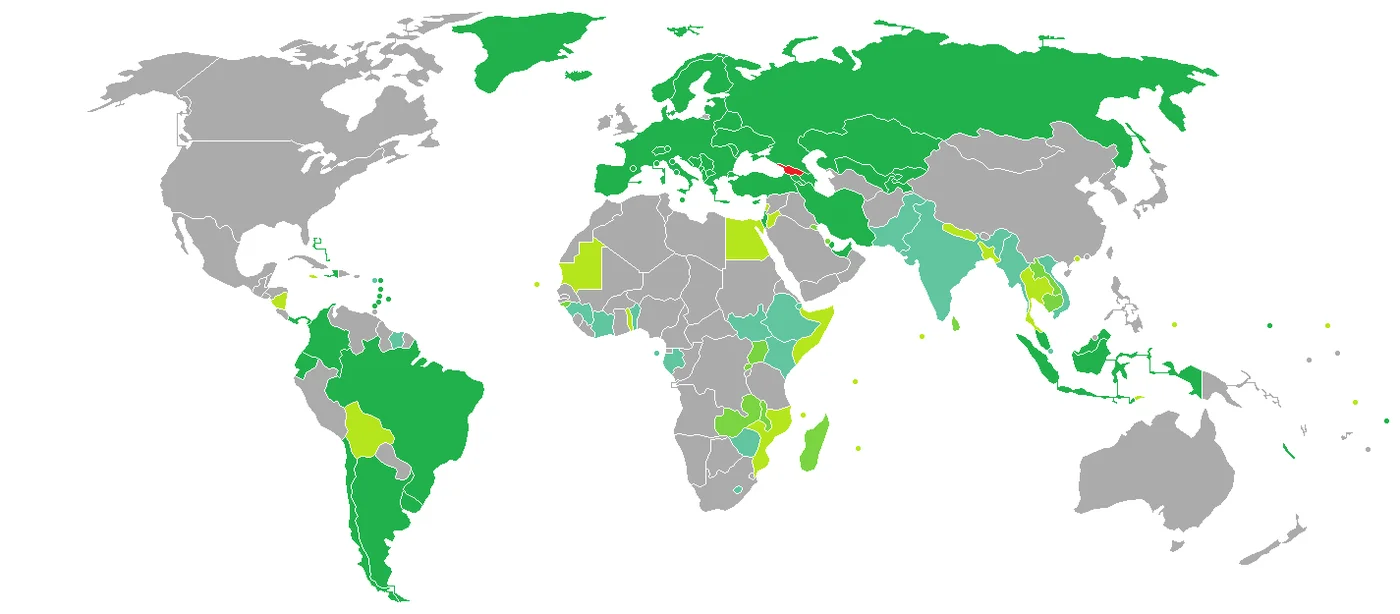
Important Note: Visa-free travel does not provide a right to work, study long-term, or reside permanently in another country. For the EU and Schengen Area, Georgian citizens may generally stay for up to 90 days within any 180-day period for tourism, business visits, family visits, or similar short-term purposes. Longer stays, employment, or residence typically require the appropriate visa, residence permit, or other authorization under the laws of the destination country.
-
Conclusion
Georgia offers several pathways to citizenship, including birth, long-term residence, marriage, restoration, ancestry, and citizenship by exception.
For most foreigners, the standard route remains naturalization after 10 years of lawful residence together with Georgian language and integration requirements. However, investors deemed important to the Georgian economy may qualify through exceptional procedures without the requirement to demonstrate knowledge of the Georgian language, history, or law.
Although Georgia does not operate a formal citizenship-by-investment program, citizenship by exception may provide a flexible and strategic route for qualifying investors, individuals with substantial economic interests, persons of Georgian ancestry, and internationally recognized professionals, including the possibility of dual citizenship.
Because citizenship decisions involve presidential discretion, legal review, and security screening, applicants should ensure that their documentation and legal strategy are properly prepared in accordance with Georgian law.
Whether you are seeking Georgian citizenship through residence, marriage, ancestry, restoration, or citizenship by way of exception, obtaining professional legal guidance may help applicants navigate the process more effectively and avoid common procedural mistakes.
Contact our legal team for a confidential assessment of your eligibility for Georgian citizenship, dual citizenship, or citizenship by exception.
About the Author
Archil Mchedlidze
Founder and Managing Partner
Archil Mchedlidze’s Law Practice LLC

Immigration, Real Estate & Business Lawyer
Legal Disclaimer: This publication is provided for general informational purposes only and does not constitute legal advice. Georgian citizenship laws, regulations, and administrative practices may change over time, and individual circumstances vary significantly.
Readers should not rely solely on the information contained in this guide when making legal or immigration decisions. Professional legal advice should be obtained before taking any action based on the information contained herein.
Archil Mchedlidze’s Law Practice LLC accepts no liability for actions taken or not taken based solely on this publication.